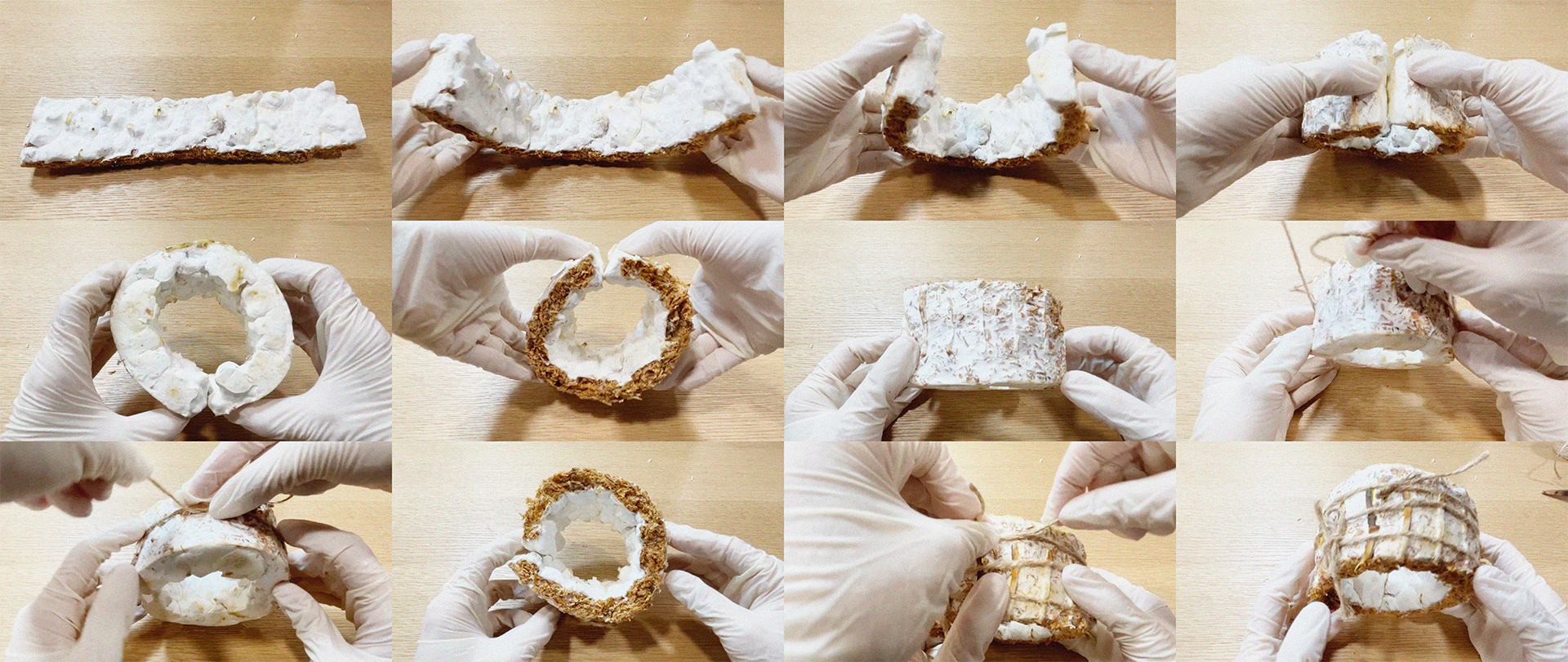
真菌作為可分解材料的研究已行之有年,但針對真菌材料在短暫可塑期內的塑形操作方法,仍缺乏系統性的整理與討論。本研究借用陶土可塑性的對照,探討將菌絲複合材料作為互動媒材時,設計控制與生物自主性之間的協商。我們以木屑、米糠、糙米、麵粉、少量茶梗、水與鹿角靈芝菌種混合而成的真菌塊為例,將其塑形流程與陶製器物的成形流程進行對照,整理兩者在材料取得、成形控制、乾燥與加熱等階段的相似與差異,進而說明活體材料在成品生成過程中的限制與可能性。本文提出六種可重複的塑形方法:綁繩法、平面法、3D 列印模具填充法、綁繩結合模具法、縫合法、挖空法,並整理菌絲複合材料的基礎操作建議,協助設計師更有效地展開後續實作。
Fungi-based materials have been studied for many years as biodegradable materials. However, there is still a lack of systematic discussion about how to shape mycelium materials during their short workable period. This study uses clay as a comparison to examine how designers negotiate design control and biological agency when using mycelium composites as an interactive material. We use mycelium blocks made from wood shavings, rice bran, brown rice, flour, a small amount of tea stems, water, and antler-form Ganoderma lucidum. We compare the shaping process of mycelium blocks with the forming process of ceramic objects. We summarize similarities and differences across stages such as material preparation, forming control, drying, and heating. Through this comparison, we explain the limits and possibilities of living materials during artifact making. We propose six repeatable shaping methods: rope binding, planar forming, 3D-printed mold filling, rope–mold hybrid forming, stitching-based assembly, and hollowing. We also provide basic operational guidelines to help designers carry out further making more effectively.
菌類を用いた材料は、生分解性材料として長年研究されてきました。しかし、菌糸体材料が短い可塑期間の中でどのように成形できるのかについては、体系的な整理と議論がまだ十分ではありません。本研究では、陶土の可塑性との比較を通して、菌糸体複合材料をインタラクティブな素材として扱う際に、デザイン上の制御と生物としての自律性がどのように交渉されるのかを考察します。木屑、米ぬか、玄米、小麦粉、少量の茶枝、水、そして鹿角霊芝の菌種から作られた菌糸体ブロックを例に、その成形プロセスを陶器制作のプロセスと比較しました。材料の準備、成形の制御、乾燥、加熱といった段階における類似点と相違点を整理することで、生きた材料が作品として生成される過程における制約と可能性を明らかにします。本研究では、紐による固定、平面成形、3D プリント型への充填、紐と型を組み合わせた成形、縫合による組み立て、くり抜きという六つの再現可能な成形方法を提示し、デザイナーが今後の制作をより効果的に進めるための基礎的な操作指針も整理します。
Keyword
Living Materials, Biological Agency, Material Practices, Human–Material Interaction, Fabrication in Design Research